Groundnut Shell Pellets
Processed groundnut shells are densified into a compact renewable fuel with a strong thermal profile for compatible industrial systems.

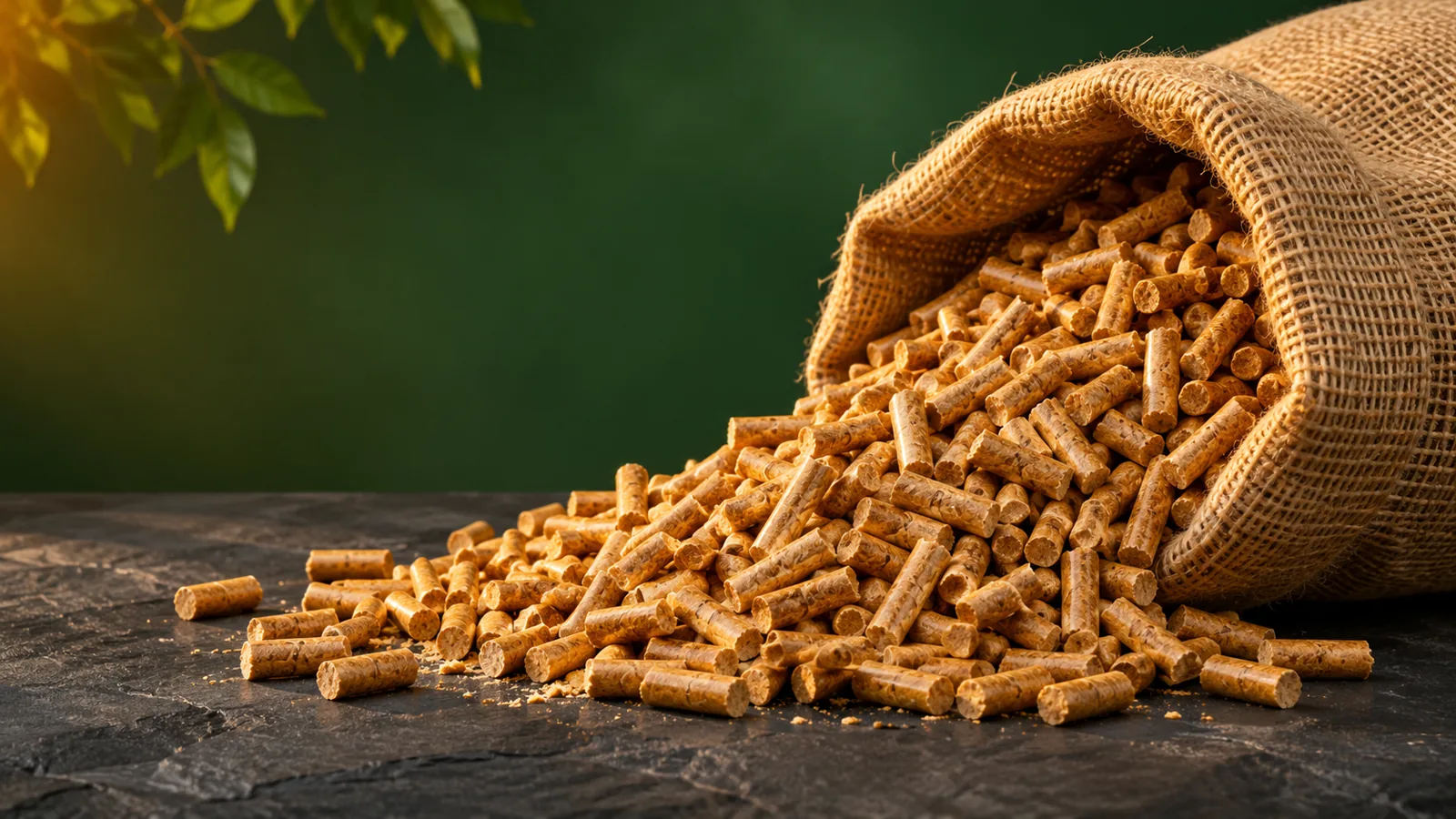
Dense, uniform fuel made from prepared agricultural residue—suited to controlled feeding, cleaner handling and dependable thermal output.
A PRACTICAL COAL ALTERNATIVE
Bio Ignis biomass pellets concentrate selected agro-residue into compact cylinders that are easier to convey, store and meter than loose biomass.
Uniform geometry supports predictable feed rates, while controlled moisture and density promote stable combustion in compatible boilers and thermal systems. The result is a renewable solid fuel designed around the everyday needs of industrial operations.
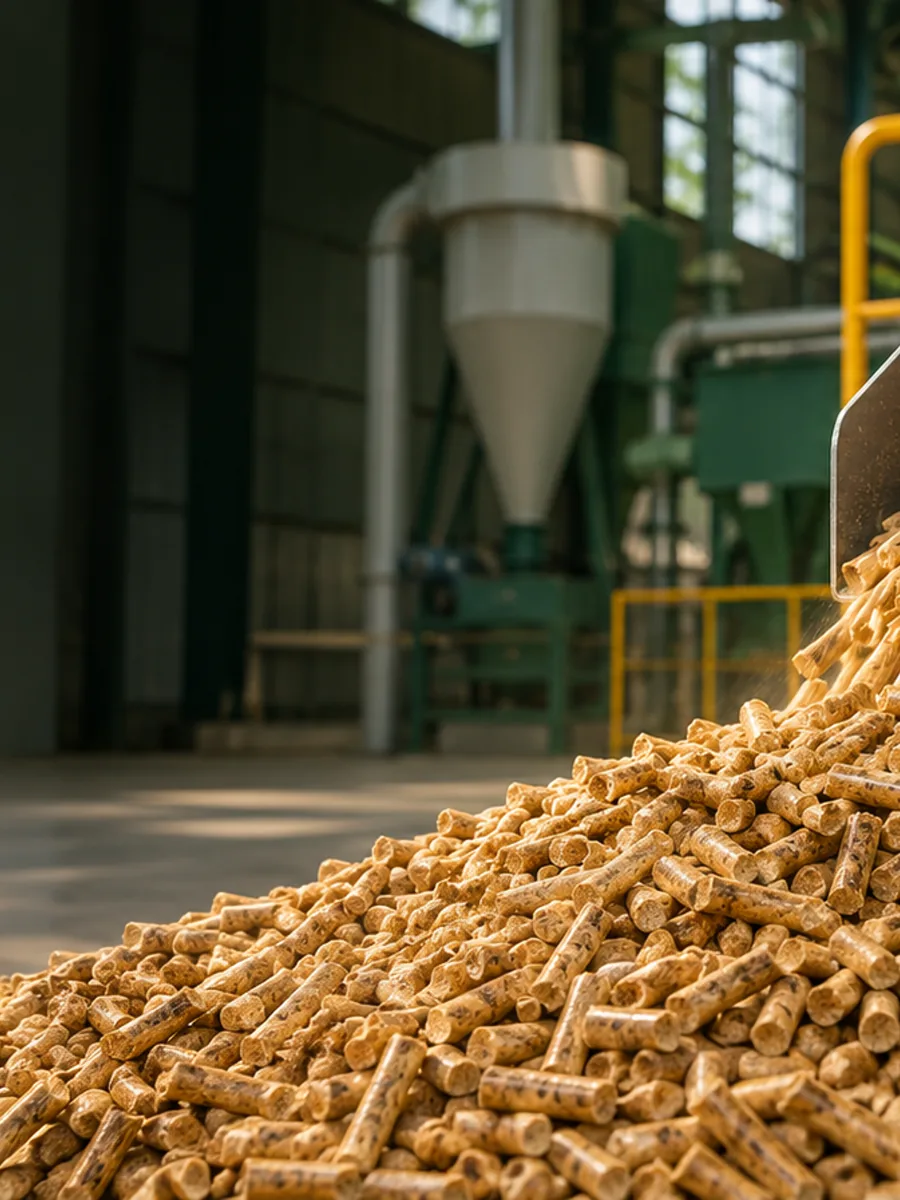
Three focused feedstock profiles for industrial heat, handling and supply requirements.
OUR PELLET RANGE
Natural biomass varies by source. We help buyers choose a pellet type around equipment compatibility, required heat output and acceptable ash levels.
Processed groundnut shells are densified into a compact renewable fuel with a strong thermal profile for compatible industrial systems.
Selected post-harvest crop residues are prepared and compressed into a versatile pellet for boilers and process-heating applications.
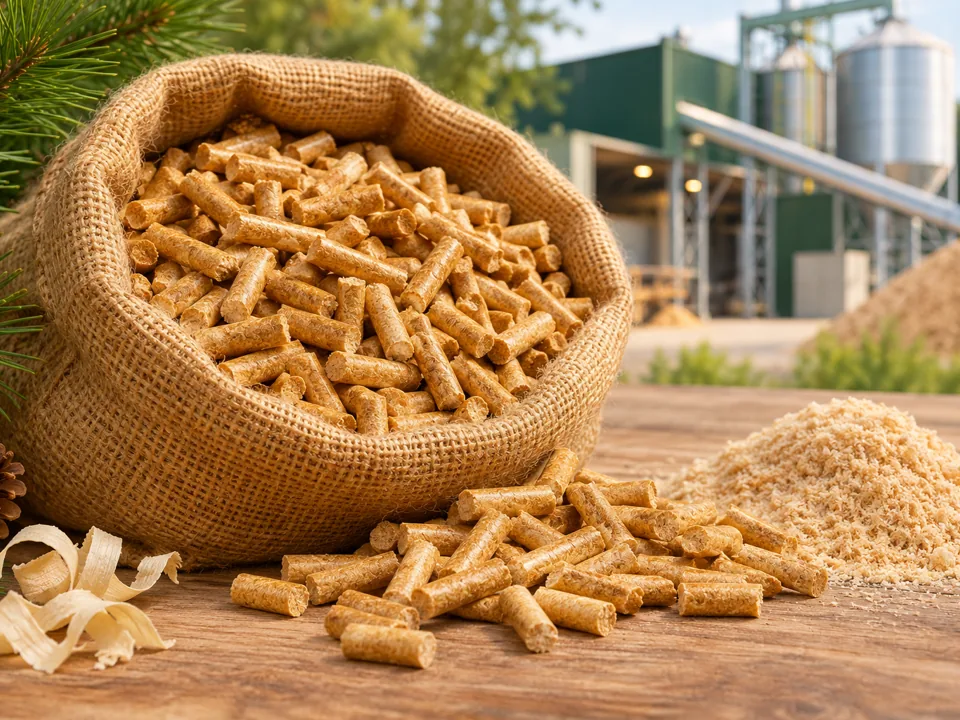
Clean pinewood sawdust is formed into uniform, low-residue pellets suited to plants seeking consistent handling and controlled fuel feeding.
COMPLETE PELLET RANGE
Each product begins with a distinct renewable feedstock. Final heat, moisture and ash performance depends on the selected material and production batch.
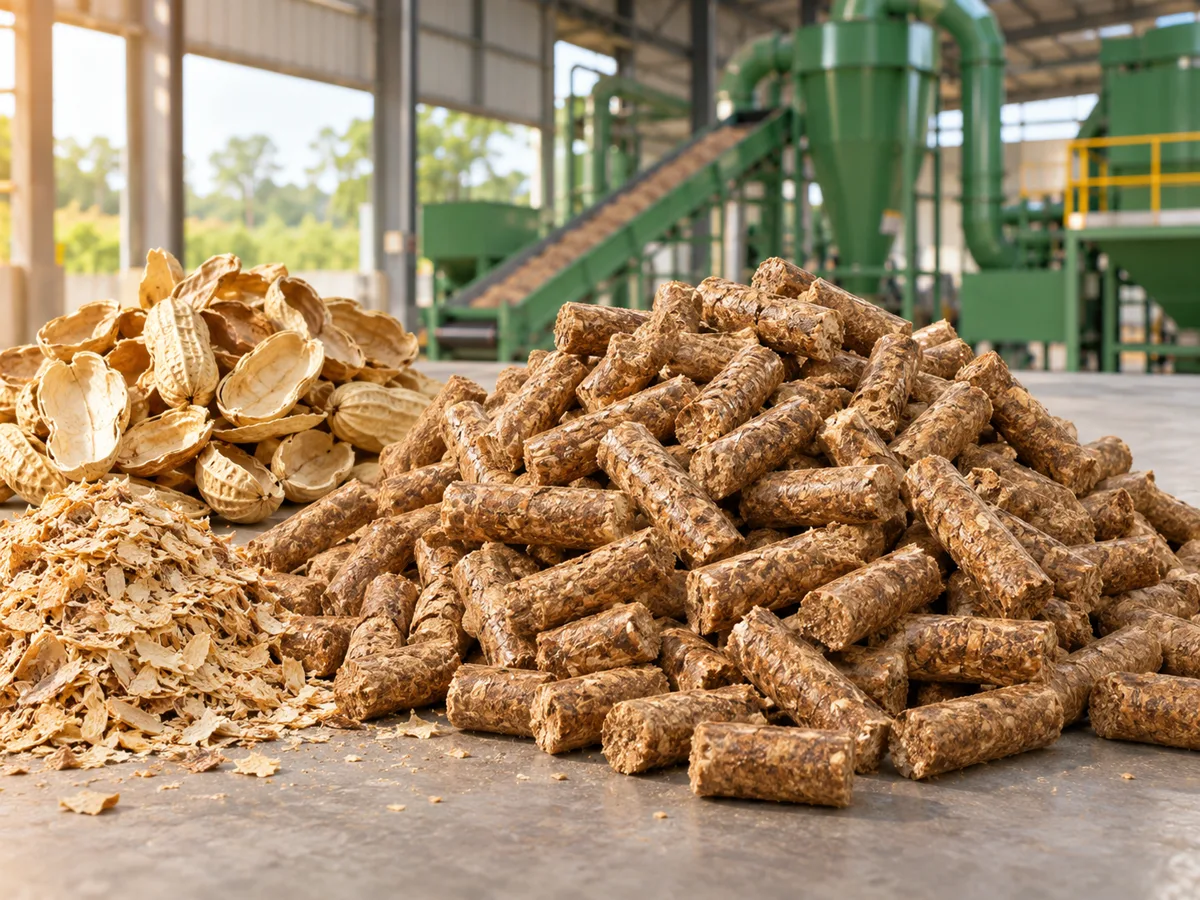
HIGH-HEAT AGRO FUEL
Processed groundnut shells are densified into a compact renewable fuel with a strong thermal profile. Their uniform shape supports predictable feeding and makes this option suitable for industries seeking stable, economical process heat.
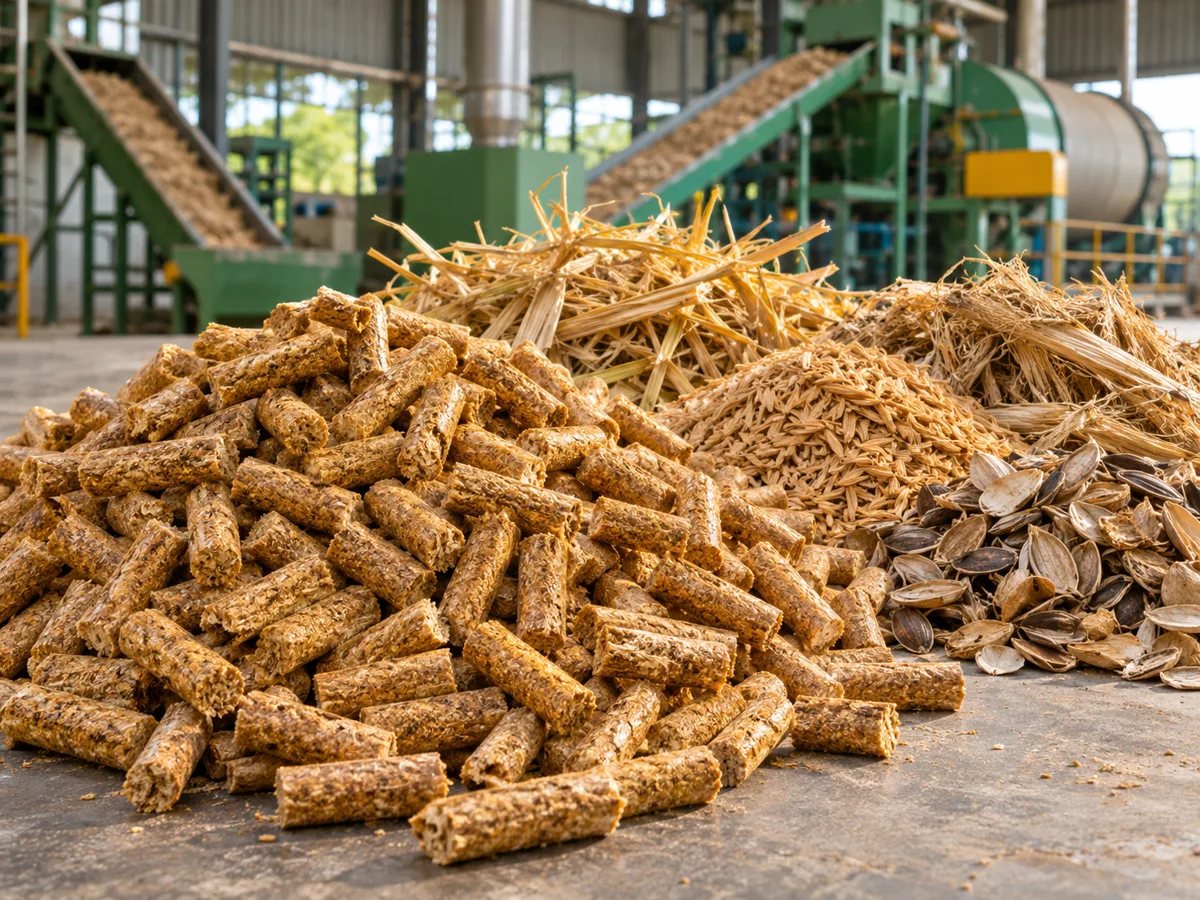
POST-HARVEST ENERGY
Selected crop residues left after harvesting and processing are cleaned, conditioned and compressed into uniform pellets. This versatile profile gives compatible industrial plants a practical route from loose agricultural material to controlled renewable fuel.
CLEAN WOOD FUEL
Clean pinewood sawdust is dried and densified into smooth, uniform pellets for controlled industrial feeding. The wood-based profile supports consistent handling and offers a practical choice where lower residue and dependable pellet quality are priorities.
TYPICAL PRODUCT PROFILE
Values vary with feedstock and season. Ask for the batch-specific quality sheet when confirming an order.
OPERATIONAL ADVANTAGES
Pellets are especially useful where repeatable sizing and controlled feeding matter.
Uniform size and controlled moisture help support steadier combustion across a production shift.
The compact cylindrical form works well with compatible screw feeders, conveyors and hoppers.
Densification reduces the space required compared with the same material in loose residue form.
Crop and processing by-products are redirected into productive thermal-energy use.
WHERE PELLETS WORK
Industrial boilers and steam generation
Food and agro-processing plants
Textile and chemical production
Manufacturing and process heating
Thermal power applications
Compatible furnaces and kilns
BUYER GUIDANCE
Share your current fuel, feeding method and monthly consumption so the recommended specification fits your equipment.
Discuss your requirement →Prepared agricultural residue is dried, milled and compressed under pressure into dense cylindrical pieces. The feedstock’s natural lignin helps bind the finished pellet.
The range includes Groundnut Shell Pellets, Crop Residual Pellets and Pinewood Sawdust Pellets. Each option has a different feedstock profile, so availability and recommended use should be confirmed for the required supply period.
Typical output varies with the raw material blend. The indicative range shown on this page is 3,300–4,200 kcal/kg; a batch-specific quality sheet should be used for procurement and operating decisions.
Compatibility depends on the boiler, burner and feeding arrangement. A plant assessment should confirm fuel size, feed rate and any equipment adjustments before conversion.
Keep them covered, dry, off the ground and protected from humidity. Moisture exposure can weaken pellets, create fines and reduce useful heat output.
Lower moisture leaves more of the fuel’s energy available for useful heat, while controlled ash can reduce cleaning frequency and residue handling. Actual values still depend on the selected feedstock and batch.
Densification creates a more compact and uniform fuel. That generally makes transport, storage, mechanical feeding and combustion control easier than with irregular loose residue.
The right choice depends on required calorific value, allowable ash, handling system, supply consistency and delivered cost. We can narrow the options from your operating details.
Pellets recover agricultural by-products that might otherwise be discarded or openly burned. Using renewable residue can also reduce dependence on fossil fuel, subject to the plant’s complete fuel and emissions profile.
Share your boiler or furnace type, current fuel, monthly consumption, preferred pellet size, delivery location and packing requirement through the Get a quote page.
BULK PELLET SUPPLY
Share your equipment, delivery location, packing preference and expected monthly volume.